How to Evaluate Astaxanthin Powder Purity and Quality?
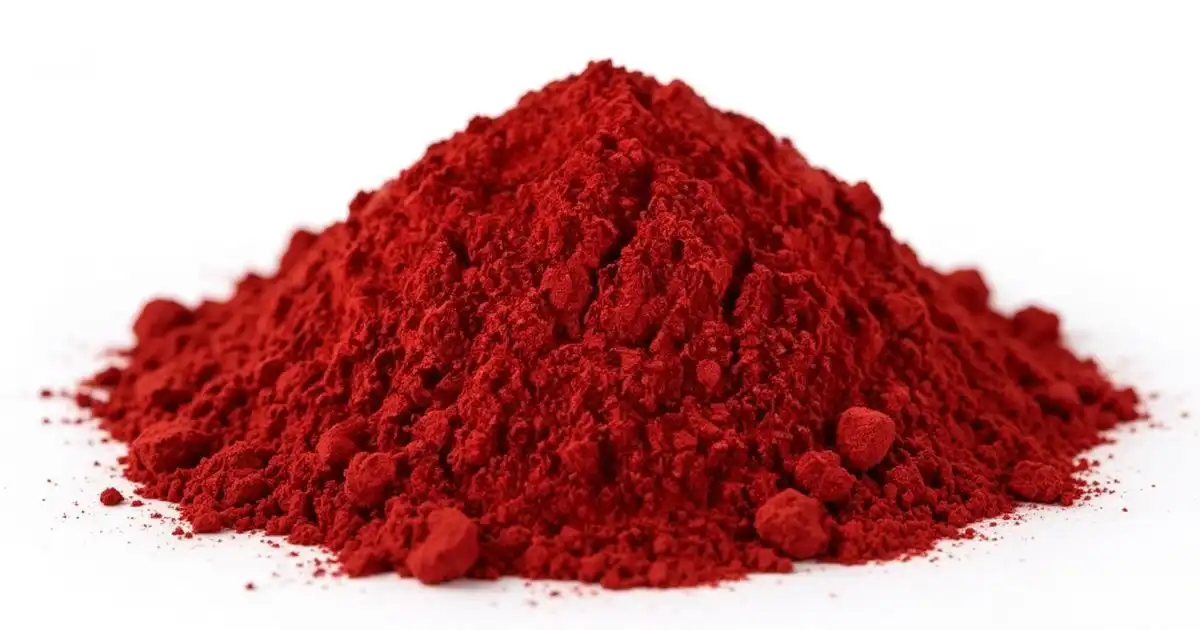
Yangge Biotech supplies high-quality Astaxanthin Powder, a natural carotenoid ingredient commonly derived from the microalgae Haematococcus pluvialis. It is characterized by its distinctive red to dark-red color and strong antioxidant properties. Astaxanthin powder is widely used as a functional ingredient in dietary supplements, nutraceutical formulations, functional foods, beverages, cosmetics, and personal-care products.
Yangge Biotech Astaxanthin Powder is manufactured under controlled quality standards to provide reliable purity, consistency, and performance for B2B formulations. Different specifications and customized solutions can be supplied according to formulation and market requirements.Contact us today to request samples, COA, specifications, third-party test reports, bulk pricing, customized packaging, or a quotation email info@yanggebiotech.com.
Evaluating astaxanthin powder purity hinges on understanding three core indicators: HPLC-verified concentration levels, stereoisomer configuration (natural 3S,3'S versus synthetic), and source verification from Haematococcus pluvialis. Premium-grade natural astaxanthin exhibits dark red to violet coloration, maintains stable potency through microencapsulation, and demonstrates antioxidant activity 6,000 times stronger than vitamin C.
Procurement professionals must scrutinize Certificates of Analysis for heavy metal thresholds, moisture content below 5%, and optical purity markers to distinguish authentic algae-derived powders from adulterated alternatives. The presence of esterified forms (mono- and di-esters) serves as a definitive fingerprint of natural origin, directly impacting bioavailability and formulation efficacy in anti-aging supplements and functional cosmetics.
Understanding Astaxanthin Powder – What You Need to Know
Natural vs. Synthetic Origins
Astaxanthin from Haematococcus pluvialis microalgae has the naturally better 3S,3'S stereoisomer, which makes the membrane more stable compared to manufactured petrochemical versions. Using supercritical CO2 to naturally extract the compound keeps the esterified structure whole, which research shows leads to better absorption rates in human trials. When made in a lab, the end result is a racemic mixture that doesn't have the right spatial arrangement to integrate with cell membranes. This means that it's about 20–50% less effective as an antioxidant in ORAC tests.
How the algae are grown affects the final powder's properties. Closed photobioreactor systems reduce the chance of contamination while allowing controlled stress induction that boosts the production of carotenoids. Harvested biomass goes through three steps that change its purity: breaking down the cell walls, extracting the lipids, and spray-drying and encapsulating them. Manufacturers who use starch-based carriers have better oxidative stability than those who use maltodextrin matrices. This is especially important for products that need to be stored for 24 months.
Commercial Formulation Formats
There are different types of powders, such as oleoresin concentrates (5–10% astaxanthin content), microencapsulated beadlets (1–5%), and grades that dissolve in cold water (CWS). Each format meets the needs of a certain formulation. Oleoresins work well with oil-based soft-gel encapsulation, but because they are thick, they need precise dosing equipment. Beadlet powders let tablets be pressed directly into shape and protect against UV breakdown during processing. CWS variants help functional drinks mix better, but they need careful pH management to keep precipitation from happening.
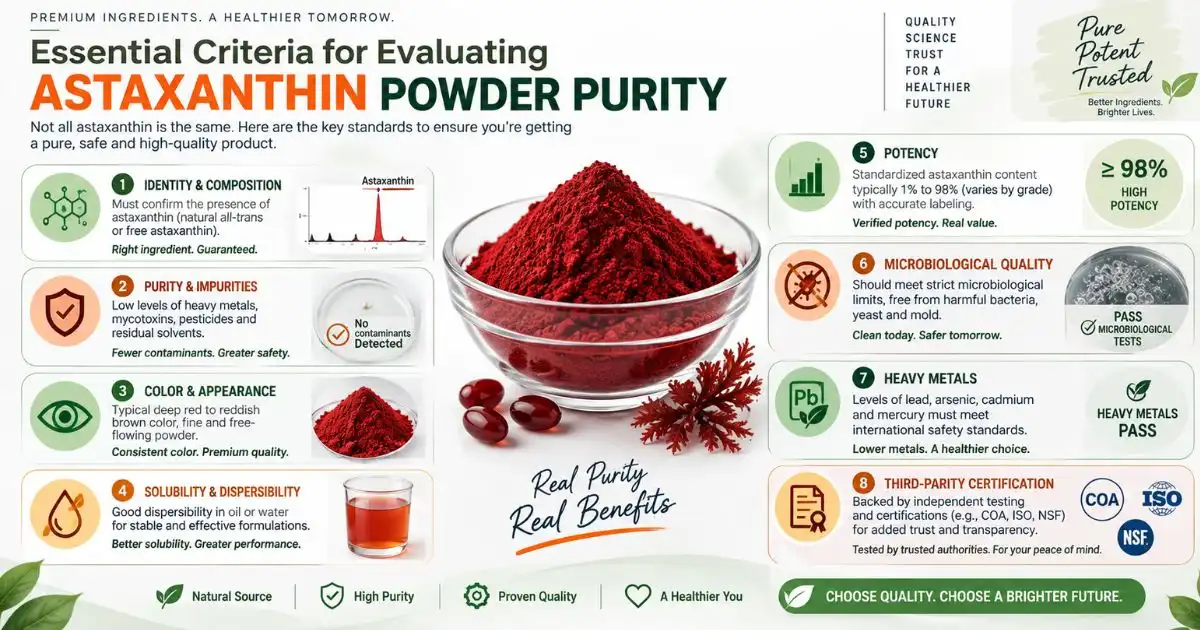
Essential Criteria for Evaluating Astaxanthin Powder Purity
HPLC Analysis and Concentration Verification
High-Performance Liquid Chromatography is still the best way to measure the amount of Astaxanthin present and to look at its stereoisomer profiles. Reliable providers offer HPLC chromatograms that clearly show the retention peaks for free astaxanthin, monoester, and diester types. Seventy to ninety percent of natural powders are esterified, while all of the molecules in manufactured materials are free-form.
Before spending money on a full spectroscopic analysis, the ratio can be used right away to tell if something is real. (Add a new sentence: Insert Astaxanthin here, linking its chemical form to the analytical results: knowing whether the Astaxanthin is esterified or free directly guides the interpretation of those HPLC peaks, making the initial ratio check even more practical.)
Specification sheets should list the total amount of carotenoids and the exact amount of astaxanthin. A 10% astaxanthin powder equals 100 mg of active substance per gram, which is important for figuring out how much to put in 4 mg or 12 mg soft gels. Watch out for labels that aren't clear and mix up "Haematococcus extract" with astaxanthin content. This is a common way to hide lower concentrations. Validated methods that follow the rules set by the USP or the European Pharmacopoeia make sure that results can be repeated from batch to batch.
Certificate of Analysis (COA) Interpretation
Real COAs have heavy metal screening (for example, lead, arsenic, cadmium, and mercury), microbial testing (for example, total plate count, E. coli, and Salmonella), and residual solvent analysis. Natural astaxanthin that was extracted using CO2 shouldn't have any solvent residues left over, while variants that were extracted using ethanol may still have small amounts of alcohols present. During storing, bacteria growth and oxidative breakdown are stopped when the moisture content is less than 5%.
Optical rotation measurements show that the chemicals are pure stereochemically. Natural astaxanthin has specific spin values between [α]D +100° and +120°, while man-made forms tend to cluster near zero because they are made up of different races. By asking for past COAs that cover more than one production lot, you can see if there is stability or if there are problems that show that process controls aren't working well enough between batches.
Contamination and Adulteration Red Flags
When a product's price is unusually low, it's probably been diluted with synthetic astaxanthin or Phaffia yeast extracts that aren't as strong. Spectrophotometric scans that show absorption peaks that aren't at the typical 478nm range point to impurities or broken down material. During supplier audits, suppliers who can't provide information about where the crops were grown, when they were harvested, or how they were extracted should be looked at more closely.
Quality Assessment Beyond Purity
Stability and Shelf Life Considerations
The way astaxanthin handles high temperatures, light, and air depends on the microencapsulation technology used. Advanced beadlet formulations based on modified starch-gelatin structures are 90% effective after 24 months at 25°C, while oleoresins that are not protected break down 30–40% in 12 months. Putting things in nitrogen-flushed, clear containers that don't let water in increases their shelf life, which is important for brands that keep stock in various stores.
Accelerated stability tests at 40°C/75% RH for three months, following ICH standards, suggests how long something will last in the real world. To make sure that formulated products live up to what they say on the label, ask for stability data that shows little to no color loss and potency retention above 95%. Changes in temperature during shipping can damage powders that aren't protected in a way that can't be fixed. This makes the quality of the encapsulation a risk factor in the supply chain.
Bioavailability and Particle Size Engineering
The rate of uptake is affected by the spread of particle sizes. It is important for emulsion-based skin care products that micronized powders (D50 < 10 microns) disperse better in oil matrices. Larger particles (50–100 microns) work well for direct compression tableting, but they may dissolve more slowly. Laser diffraction analysis, which is part of quality paperwork, helps predict how formulations will behave during product development trials.
In pharmacokinetic tests, Astaxanthin powders that have been handled with medium-chain triglycerides or phospholipids show 2-3 times higher bloodstream concentrations than crystalline forms. Lipid carriers improve solubility by acting like the body's natural way of absorbing fat from food. Brands that want to charge more can justify the higher prices by saying that their products work better, which is supported by carrier-enhanced formulations.
Manufacturing Standards and Certifications
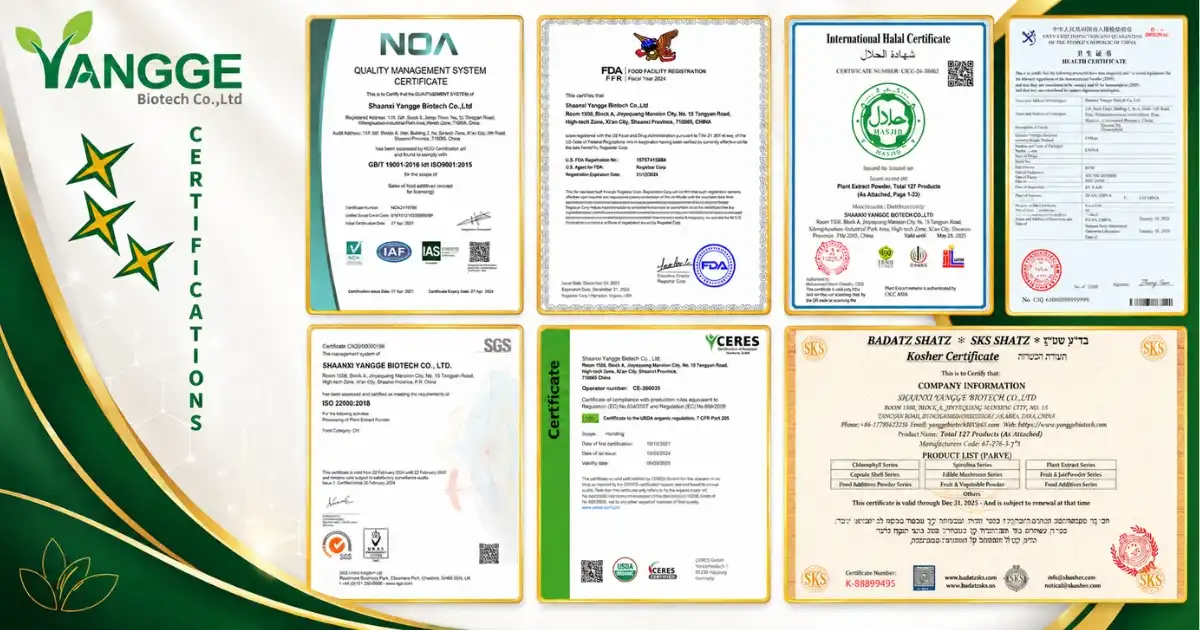
Cross-contamination is avoided in GMP-certified facilities by using proven cleaning methods, watching the surroundings, and batch tracking systems. FSSC 22000 adds strict necessary programs to ISO 22000 approval, which means that food safety management is complete. Kosher and Halal licenses help businesses reach more customers, but they need to be constantly checked by rabbis or Islamic authorities. Check the dates on the certificates and the groups that issued them.
Here are the most important qualifications that set professional-grade sellers apart:
- HACCP Compliance: A written risk assessment with key control points for physical, chemical, and biological risks during the extraction and drying processes
- Organic Certification: Growing algae without using synthetic pesticides or banned substances is guaranteed by organic standards set by the USDA or the EU.
- Non-GMO Project Verification: Testing by a third party that shows there are no genetically modified organisms in cultivation strains
With these certificates, you can be sure that the way the products are made meets world standards for quality. By asking certification bodies for audit reports once a year, you can find out if facilities are always following the rules or if their credentials have expired.
Procurement Considerations for Bulk Astaxanthin Powder
Supplier Evaluation Framework
Direct manufacturers offer better prices and more customization options, but they need larger minimum order quantities, usually 50–100 kg for specific needs. Distributors offer lower MOQs (5–25 kg) and faster delivery, but they add profit layers that make the cost per kilogram go up. Distributors help brands that are making a lot of different SKUs during the research and development stages, before they switch to direct buying on a large scale.
Lead times are very different. Stock items usually ship within 7–14 days, but special specs (like specific concentrations, carrier systems, or particle sizes) need 6–8 weeks for planning production, quality testing, and shipping internationally. By planning formulation timelines around these realities, you can avoid expensive production delays when releasing seasonal products or reacting to market trends.
| Supplier Type | Typical MOQ | Lead Time | Customization | Price Point |
|---|---|---|---|---|
| Direct Manufacturer | 50–500 kg | 6–8 weeks | A lot of freedom | Base prices that are competitive |
| Regional Distributor | 5–50 kg | 1–2 weeks | Not many choices | 15–30% markup |
| Trading Company | 10–100 kg | 3–4 weeks | Moderate | Different margins |
Regulatory Compliance and Documentation
Different markets have different rules about importing natural colorants and nutrition vitamins. In the US, FDA-regulated goods need to send out New Dietary Ingredient notices for new formulations that use more than the usual amount. Unless astaxanthin use predates 1997 rules, European Union countries require Novel Food permission. The Japan's Ministry of Health lets natural astaxanthin be added to food, but not synthetic versions.
Suppliers should send regulatory status letters that are special to each country and prove that they meet the needs of the target market. Import clearance is sped up by paperwork like phytosanitary certificates, certificates of origin, and allergen declarations. Experienced sellers stay up to date on new rules that affect the start of a product, like the labeling requirements for California Prop 65 or the license requirements for Canadian NHP.
Step-by-Step Guide: How to Evaluate and Select Astaxanthin Powder Suppliers
Define Technical Specifications and Volume Requirements
First, be clear about the exact technical specifications, preferred carriers, and types of formulations you want to make for Astaxanthin. A company that makes soft gels needs oleoresin that is 5–10% concentrated and mixed with medium-chain triglycerides. A company that makes tablets needs beadlet powder that is 2% and has very little moisture. Write down your yearly volume estimates to help you negotiate prices. When you sign an annual contract for 500 kg or more of Astaxanthin, suppliers often lower their per-kilo prices by 20 to 35 percent.
Request and Analyze Sample Materials
Get 100–200g sample materials with up-to-date COAs, specification sheets, and Material Safety Data Sheets. Do tests, either yourself or someone else, to find out the real concentration (comparing it to what the seller says it is), as well as the limits for heavy metals and microbes. Flowability, bulk density, and solubility should all be tested physically to make sure they fit the powers of your handling equipment.
Before buying in bulk, small-scale formulation tests show problems with compatibility. Mix samples with the active ingredients, carriers, or excipients that they are supposed to be mixed with to look for precipitation, color changes, or stable issues. Write down the organoleptic properties. Natural astaxanthin should have mild marine notes and no rancid or chemical smells that would suggest it is breaking down or being man-made.
Conduct Supplier Audits and Credential Verification
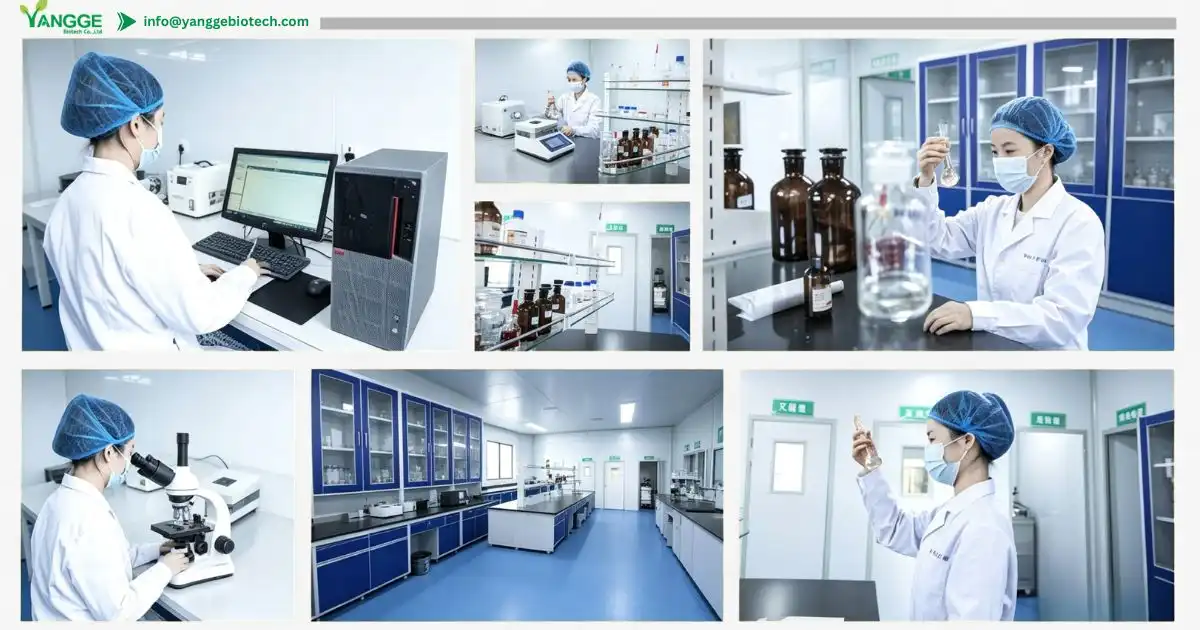
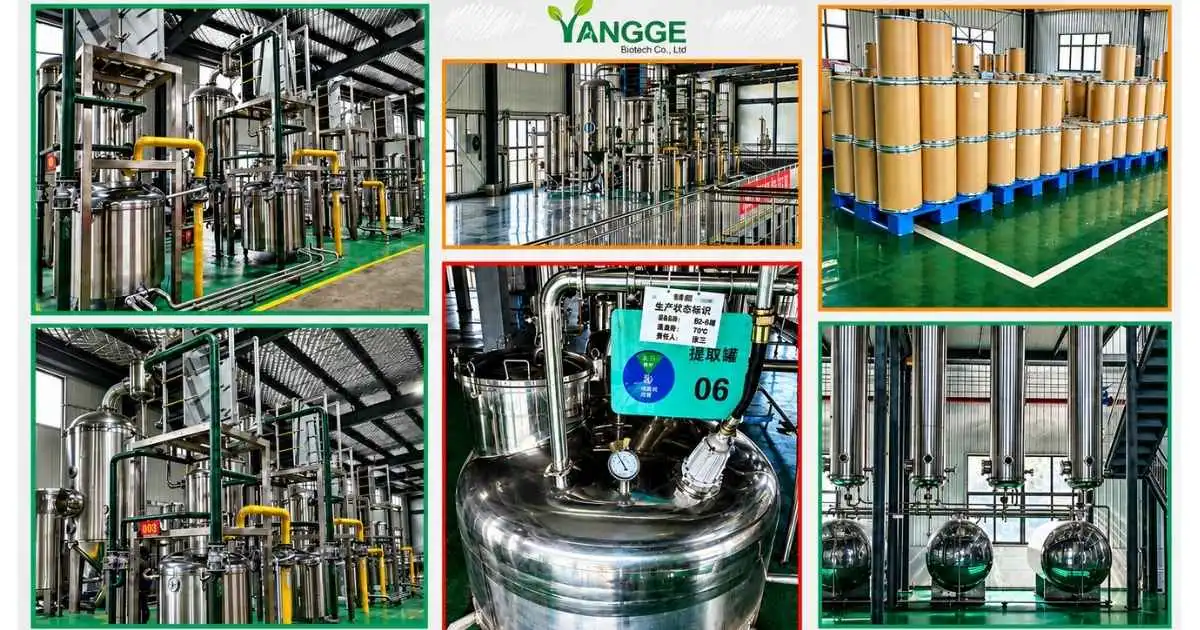
Supplier Audits, whether they are done virtually or in person, check the production capacity, quality control labs, and storage conditions. Some important things that were noticed were the different types of clean rooms for sealing areas, the well-calibrated analysis equipment (HPLC, spectrophotometers), and the temperature-controlled storage. Go over the normal working processes for checking the incoming raw materials, testing while the product is being made, and deciding when the finished product can be released.
Contact the organizations that issued the certification directly to make sure it is real. In the supply lines for ingredients, fake certificates are common. To avoid expensive refunds, certificate numbers should be checked against official databases. Ask current customers in similar industries for examples, paying special attention to how reliable delivery is, how quickly technical support responds, and how consistent batch-to-batch consistency is over relationships of 12 months or more.
Implement Trial Orders and Performance Monitoring
Place trial orders at 25–50% of the expected annual volume to see how well the supplier does over a number of deliveries. Check shipping rates, the condition of the packaging when it arrives, and the correctness of the paperwork. Set up key performance measures, such as how long the product's potency lasts after being stored, how many customer complaints there are about finished goods, and how quickly the source responds to technical questions.
Communicating openly about forecasting, managing inventory, and working together to solve problems when formulation problems come up is an important part of building smart relationships. When suppliers care about their customers' success, they offer more than just transactional support. For example, they provide technical literature, application guides, and regulatory support. Annual business reviews that talk about market trends and new product possibilities are a sign of partnership-oriented suppliers that are worth sticking with for a long time.
Conclusion
Analytical verification, source authentication, and seller manufacturing skills must all be carefully considered when assessing the quality of Astaxanthin powder. Natural powders from Haematococcus pluvialis that have full COAs, documented stereoisomer profiles, and strong microencapsulation give premium formulations the bioavailability and stability they need.
Professionals in procurement have to weigh the purity requirements against practical issues such as nutrition engineering, regulatory compliance paperwork, and the supplier's dependability over long-term partnerships. The 6–10 week evaluation cycle, which includes a literature review and trial production, is necessary to protect the formulation's effectiveness and the brand's reputation in the competitive anti-aging market.
FAQ
What purity level should I target for supplement formulations?
Natural astaxanthin powders usually have a percentage between 1% and 10%. For the best mix between price and supplement formulations freedom, natural 2-5% grades are best. Higher concentrations (10%) work well in low-dose capsules, but they raise the cost of the raw materials by the same amount. The target specs should meet the dosage needs of the finished product while still allowing for manufacturing errors.
How do I distinguish natural from synthetic astaxanthin?
Synthetic materials have no astaxanthin at all, while natural ones have 70–90% esterified forms (mono- and di-esters) that can be found through HPLC analysis. Optical rotation testing and stereoisomer analysis both confirm that the 3S,3'S configuration is unique to sources that come from algae. Asking for thorough paperwork on the extraction method helps prove where the crop came from.
What certifications matter most for international distribution?
ISO 22000 and GMP certifications make sure that the quality of the products sold around the world. Kosher and Halal licenses help businesses reach new groups of customers. Organic approval comes with higher costs and needs regular checks to make sure it's being followed. Regulatory status letters that confirm Novel Food or FDA compliance keep import problems from happening in target markets.
Partner with Yangge for Premium Astaxanthin Supply
Yangge Biotech is an expert at providing pharmaceutical-grade Haematococcus pluvialis extract powder that meets the high standards that top names require. Our 10% astaxanthin powder is certified by both KOSHER/USP, and it comes with full HPLC-verified COAs that prove its stereoisomer purity, heavy metal compliance, and microbial safety. We solve the supply problems that growing supplement brands are having by making one ton available right away and offering flexible OEM services that can support custom soft-gel, pill, capsule, and gummy formulas.
Our ISO, HACCP, and Halal certificates show that we make high-quality products that meet foreign standards. In addition to providing raw materials, we also offer formulation advice, help with stability testing, and regulatory documentation that speeds up the development of your product. Our technical team works together during the 6–10 week development cycle that is usual for complicated formulations. This is true whether we are releasing astaxanthin supplements on their own or complex antioxidant mixes that combine vitamins C and E. Contact us or you can email our sourcing experts at info@yanggebiotech.com to ask for samples, look at our most recent COA paperwork, or talk about making custom specs for your next line of anti-aging products.
References
1. Ambati, R.R., Phang, S.M., Ravi, S., and Aswathanarayana, R.G. (2014). "Astaxanthin: Sources, Extraction, Stability, Biological Activities and Its Commercial Applications." Marine Drugs, 12(1), 128-152.
2. Higuera-Ciapara, I., Félix-Valenzuela, L., and Goycoolea, F.M. (2006). "Astaxanthin: A Review of its Chemistry and Applications." Critical Reviews in Food Science and Nutrition, 46(2), 185-196.
3. Guerin, M., Huntley, M.E., and Olaizola, M. (2003). "Haematococcus astaxanthin: Applications for Human Health and Nutrition." Trends in Biotechnology, 21(5), 210-216.
4. Yuan, J.P., Peng, J., Yin, K., and Wang, J.H. (2011). "Potential Health-Promoting Effects of astaxanthin: A High-Value Carotenoid Mostly from Microalgae." Molecular Nutrition & Food Research, 55(1), 150-165.
5. Capelli, B., Bagchi, D., and Cysewski, G.R. (2013). "Synthetic Astaxanthin is Significantly Inferior to Algal-Based Astaxanthin as an Antioxidant and May Not be Suitable as a Human Nutraceutical Supplement." Nutrafoods, 12(4), 145-152.
6. Fassett, R.G. and Coombes, J.S. (2011). "Astaxanthin: A Potential Therapeutic Agent in Cardiovascular Disease." Marine Drugs, 9(3), 447-465.

Based on your location and order quantity, you will have the opportunity to receive a limited time free shipping promotion!
Who we are
Popular Blogs